© Janaina Wagner
Curupira e a máquina do destino
Curupira and the Machine of Destiny
Janaina Wagner
2021
25’
25’
às 22h00
Sessão Destino Brasil – Entre a Realidade e o Imaginário. Reflexões sobre poder, identidade e espiritualidade
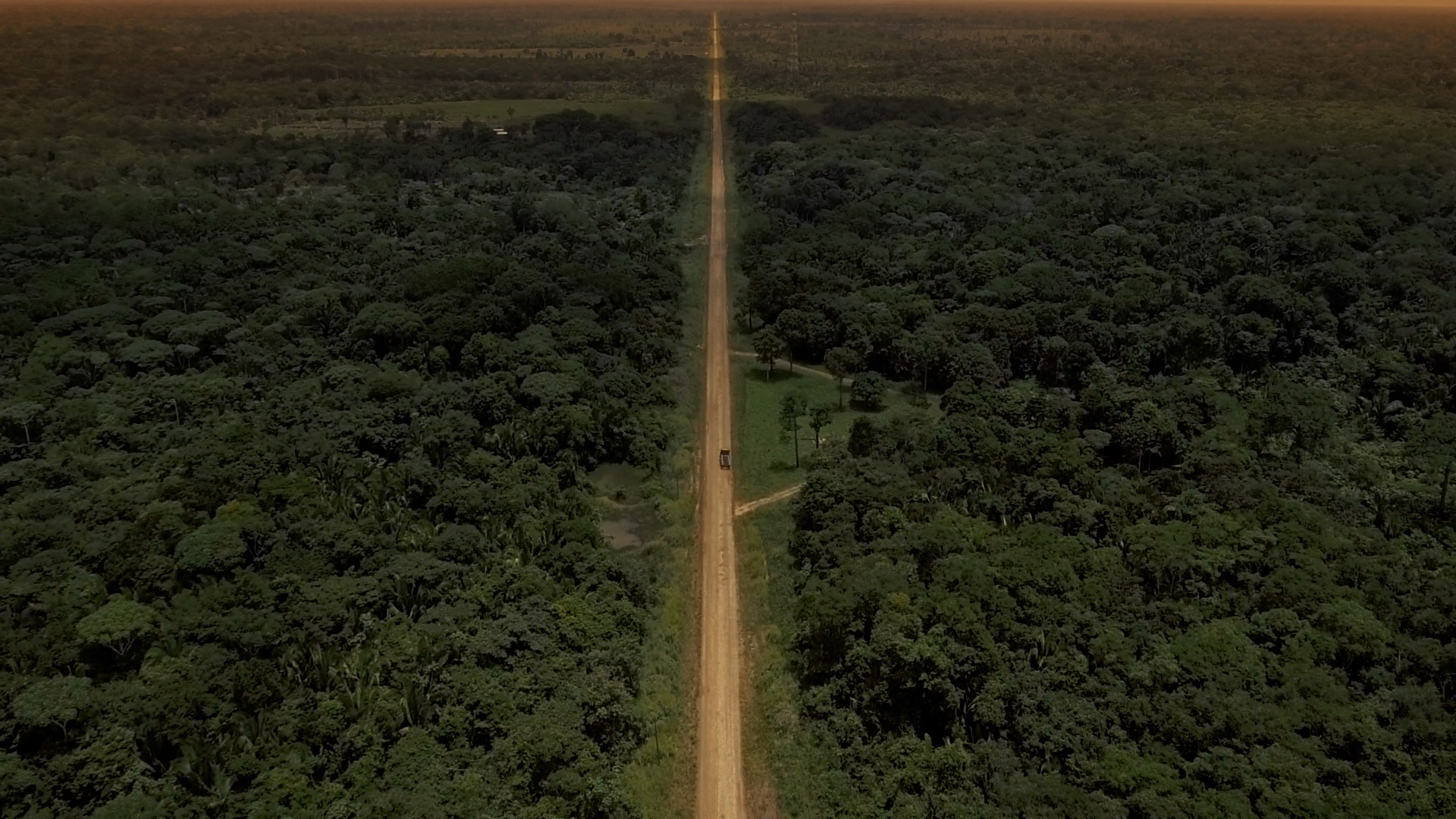
Curupira é a primeira parte da trilogia transamazónica de Janaina Wagner, que inclui Quebrante (2024) e Quando o segundo sol chegar/um cometa nos teus olhos (2025). Seguimos a protagonista no coração da Amazónia, onde a estrada Transamaznica BR-230 se cruza com a igualmente lendária Estrada Fantasma BR-319. O filme, uma docuficção semelhante a um road movie, faz referência a Iracema - Uma Transa Amazônica (1974), um filme de Jorge Bodansky e Orlando Senna e um clássico do Cinema Novo. Na obra de Janaina Wagner, a protagonista aparece como o fantasma da personagem principal com o mesmo nome, que incorpora uma prostituta de 14 anos, indígena, que viaja com o condutor de um camião. O filme termina com o encontro imaginário e significativo entre o fantasma de Iracema e Curupira, uma figura mitológica bem conhecida no Brasil pelas comunidades indígenas, considerada um protetor poderoso das florestas e temido como vingador. O filme torna-se uma declaração artística contra as exigências neocoloniais das potências externas na região amazónica, incluindo o Estado, simbolizado pela Transamazónica, que foi inaugurada em 1972 durante a ditadura militar (1964–1985).
NESTA SESSÃO
Aparição
Camila Freitas