imagem-evento

©Muntadas_Courtesy of Electronic Arts Intermix (EAI), New York

Alphaville e Outros Alphaville e Outros
Antoni Muntadas

2011
9’18’’
25 agosto
às 18h30
Curadoria Lori Zippay
Sessão Geografias da Pertença

Alphaville, um condomínio residencial fechado em São Paulo, é o principal cenário de Alphaville e outros, obra de Muntadas que analisa o fenómeno das gated communities (comunidades fechadas) e a forma como o medo e a procura de exclusividade conduzem ao isolamento e à exclusão urbanos.

A obra toma como referência o filme Alphaville (1965), de Jean-Luc Godard — que inspirou o nome do bairro paulistano —, uma visão distópica de ficção científica sobre um futuro urbano totalitário. Sequências do filme a preto e branco de Godard são justapostas a materiais promocionais quase utópicos do Alphaville brasileiro, animações digitais, imagens captadas por câmaras de vigilância e vistas das piscinas, campos de ténis e jardins do condomínio.

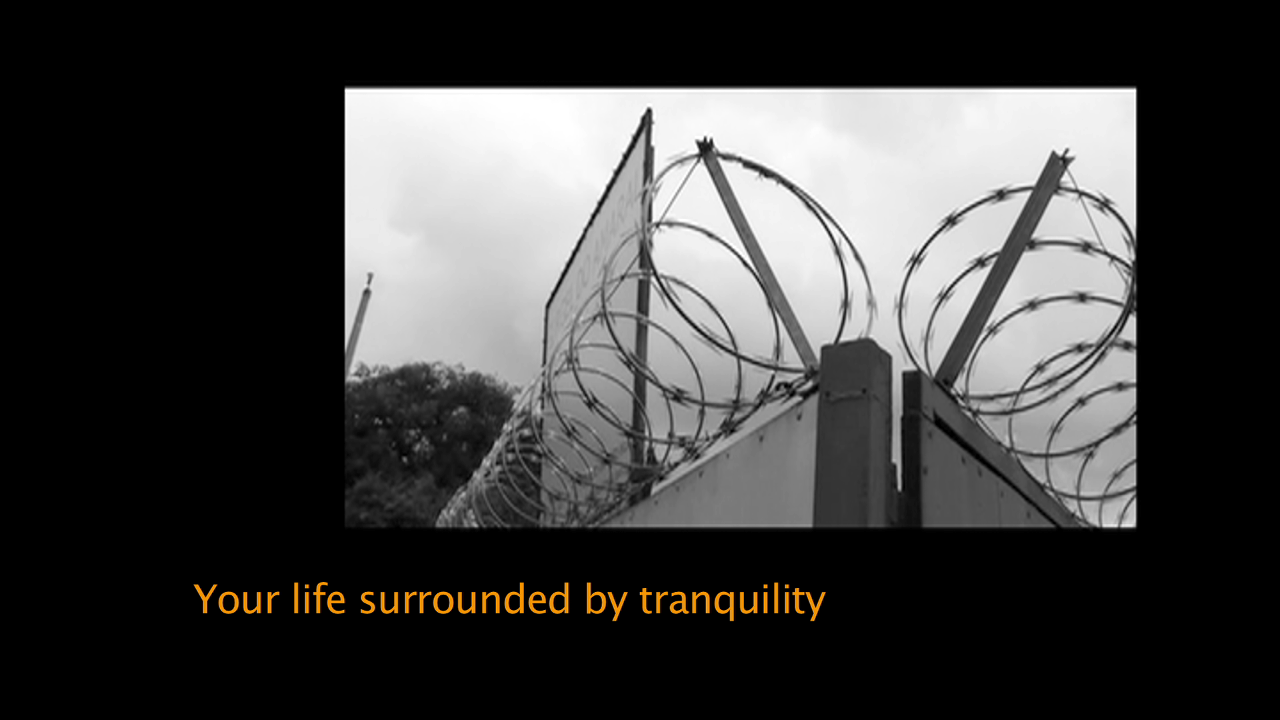
Muntadas apresenta uma arquitetura do espaço assente na retórica e nos mecanismos do medo e do controlo; as imagens recorrentes de extensas vedações em movimento evocam as muralhas defensivas medievais que outrora circundavam as cidades.

NESTA SESSÃO

imagem-evento
Ñ (enn-yay)
Tony Labat
imagem-evento

©Muntadas_Courtesy of Electronic Arts Intermix (EAI), New York

Alphaville e Outros
Antoni Muntadas

2011
9’18’’
25 August
at 18h30
Location
Curator Lori Zippay
Session Geographies of Belonging

“Alphaville,” a gated residential neighborhood in Sao Paolo, is the primary site of Muntadas’ Alphaville e outros, which examines the phenomenon of “gated communities,” and how fear and a search for exclusivity lead to urban isolation and exclusion. 

The work takes as its reference the 1965 film Alphaville by Jean-Luc Godard (from which the name of the Sao Paulo neighborhood was derived), a dystopian sci-fi vision of a totalitarian, urban future. Scenes from Godard’s black-and-white film are juxtaposed with near-utopian promotions for the Brazilian “Alphaville,” digital animations, footage from security cameras, and images of the Sao Paolo neighborhood’s pools, tennis courts and gardens. 

Muntadas presents an architecture of space based on the rhetoric and mechanisms of fear and control; the recurring images of massive, running fences suggest the medieval defensive walls that once ringed cities.

ON THIS SESSION
imagem-evento
Ñ (enn-yay)
Tony Labat